


















The First 100 Years of European Colonization in the Americas
Explore the first century of European colonization in the Americas, from Columbus’s 1492 voyage to Spanish, Portuguese, French, and British settlements, and their impact on native populations.
The Dawn of European Exploration
In the late 15th century, Christopher Columbus, an ambitious sailor from Genoa, approached the King of Portugal with a proposal to find new lands and riches to the west. Dismissed as fanciful and costly, Columbus turned to Spain in 1492. Spain, recently unified and wealthy after expelling Muslim forces, eagerly accepted his offer. In August of that year, Columbus set sail across the Atlantic and landed in the Bahamas just two months later, marking the first significant European contact with the Americas.
Columbus’s discovery set the stage for European colonization of the New World, ultimately giving birth to new nations and immense wealth for European powers. However, it also had devastating consequences for native populations, many of which never recovered. Initially seeking a westward route to the Far East, Columbus inadvertently opened an entirely new continent to European ambitions.
Motivations Behind European Expansion
For centuries, Europe relied on the Silk Road to trade with India and China, exchanging silk, spices, tea, cotton, and precious metals. The fall of Constantinople to the Ottoman Empire in 1453 disrupted this trade, forcing European nations to search for alternative routes to the east. Portugal became a leader in sea navigation, planning to reach India by sailing around Africa. Columbus’s westward route offered another possibility, ultimately changing the trajectory of European exploration.
Spanish Colonization
Columbus’s second voyage in 1493 was far more purposeful, involving 17 ships with colonists, priests, soldiers, and even mastiff dogs to intimidate indigenous populations. He observed that Caribbean natives were largely unarmed and could easily be converted to Christianity, which encouraged Spanish expansion. The first permanent European settlement, Santo Domingo, was established on Hispaniola (modern Haiti and the Dominican Republic).
Spain’s growing claims prompted Pope Alexander VI to draw a demarcation line in 1494, dividing the Atlantic: lands to the west belonged to Spain, while lands to the east were for Portugal. This treaty granted Spain rights to Columbus’s discoveries while Portugal retained control over Africa, Southern Asia, and eventually Brazil.
Portuguese Expansion
Portugal’s focus initially remained on Africa and India, with Vasco da Gama successfully reaching India by sea in 1498. Pedro Álvares Cabral, sailing westward, landed on the coast of Brazil in 1500 and claimed it for Portugal. Though initially uninterested in Brazil’s resources beyond timber for red dye, Portugal later established colonies, dividing the territory into 15 captaincies for agricultural development. Sugar emerged as the key crop, and by 1549, Brazil became an official Portuguese Crown Colony, with Salvador as its capital.
Conquest in Central and South America
Spain rapidly expanded across the Americas. Following Hispaniola, they colonized Puerto Rico, Jamaica, and Cuba. In 1513, Vasco Núñez de Balboa became the first European to see the Pacific Ocean from Panama. Hernán Cortés conquered the Aztec Empire in Mexico by 1521, leveraging superior weaponry and devastating smallpox outbreaks. Francisco Pizarro followed with the conquest of the Inca Empire in 1532, aided by internal Incan conflicts. Spain thus established dominance over vast territories in Central and South America.
French and British Ventures
France entered the Americas in 1534 when Jacques Cartier explored Newfoundland and the St. Lawrence River. Attempts to establish New France in Quebec and along the Atlantic coast were largely unsuccessful due to harsh weather, native resistance, and Spanish opposition.
England, with a powerful navy, began exploring North America in the late 16th century. Under Queen Elizabeth I, English ships attacked Spanish treasure fleets while explorers like Walter Raleigh attempted settlements such as Roanoke Island. Though early colonies struggled, England remained committed to establishing a presence in the Americas.
Interactions with Indigenous Peoples
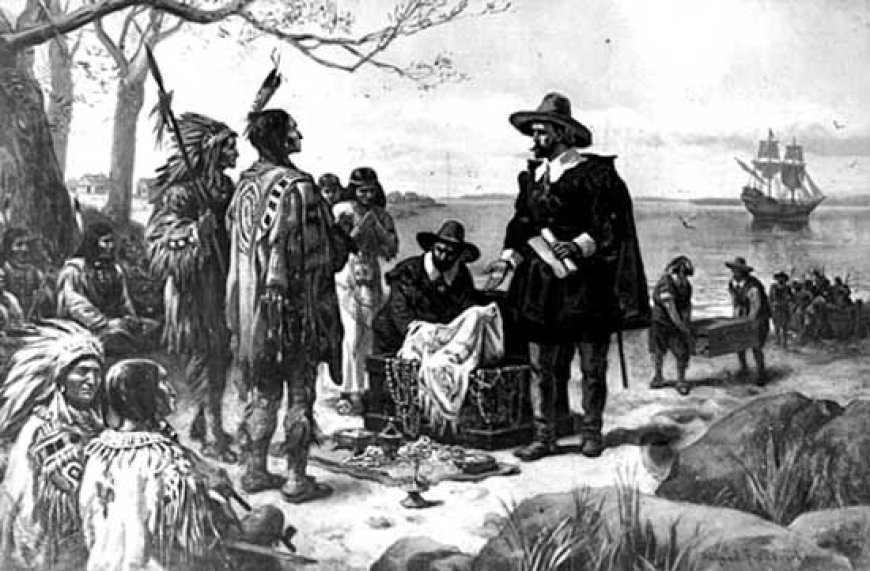
European colonizers varied in their approach to indigenous populations. The Spanish enslaved natives in Hispaniola and Mexico, while diseases like smallpox decimated communities. The Portuguese traded with locals in Brazil, initially relying on natives for timber and other resources. The British and Spanish viewed themselves as superior, aiming to civilize and control native populations. French colonists often established friendlier relations, recognizing the advantage of local knowledge for survival and trade. Missionaries, particularly from Spain, sought to convert natives to Christianity, with Pope Paul III advocating humane treatment.
Conclusion
By the end of the first century of European colonization, Spain had secured vast territories and immense wealth from the Americas. Portugal had established Brazil as a strategic colony, while France and England were beginning to stake their claims in North America. These early interactions between Europeans and indigenous populations set the stage for centuries of colonization, cultural exchange, conflict, and transformation across the New World.