
















Public vs Private Schools in Canada What is the Difference
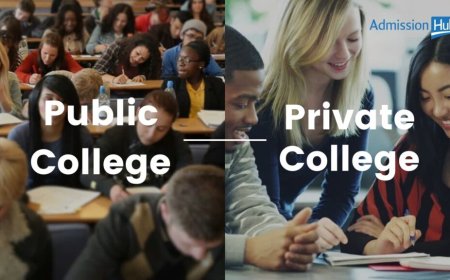
In Canada, the key distinction between public and private schools is how they’re funded and managed. Public schools are financed through government taxes and offer free education to students. In contrast, private schools depend on tuition fees and private contributions, with little or no government support. These funding differences often result in variations in class size, available resources, and teaching methods.

The debate between public and private schools in Canada highlights the distinct educational pathways available to families, shaped by historical, funding, curriculum, governance, and accessibility differences. Public schools, which enroll approximately 92% of Canadian students, are government-funded institutions that aim to provide universal access to education, reflecting a commitment to inclusivity and equity across diverse socioeconomic and cultural backgrounds. Conversely, private schools, which account for about 10% of student enrollment, offer more specialized programs and curricula, often requiring tuition fees and selective admissions processes that can limit accessibility for lower-income families.[1][2][3][4]
The historical context of education in Canada reveals a transition from religious and community-based private education to a structured public school system established in the late 19th century, primarily driven by the Public Schools Act in Ontario. This shift aimed to ensure that all children, regardless of background, could access education. However, the emergence of private schools has led to a perception of competition with public institutions, prompting discussions on educational quality, resources, and the implications for social equity in education.[5][2][6][7]
Funding disparities further underline the differences between the two systems. Public schools are financed mainly through government funding, which can vary significantly by district and may lead to inequalities in educational resources and class sizes. In contrast, private schools largely rely on tuition and donations, enabling them to offer smaller class sizes and specialized educational programs, but often at the cost of accessibility for some families.[8][9][10] Critics argue that the increasing financial support for private education, such as tax credits and subsidies, diverts crucial resources away from public schools, exacerbating the challenges faced by the public education system.[10][11]
The choice between public and private education significantly impacts students' learning experiences, with public schools emphasizing standardized curricula de- signed to meet provincial educational outcomes, while private schools enjoy greater flexibility in developing their educational philosophies. As such, the ongoing discourse around public versus private education in Canada raises essential questions about equity, access, and the future of the country's educational landscape.[12][13][4]
Historical Context
The evolution of public and private education in Canada is deeply rooted in the country's history, with influences stemming from colonial times to contemporary policy frameworks. Initially, education was primarily a responsibility of religious orga- nizations and local communities, leading to the establishment of a variety of private schools. These institutions were often aligned with specific religious or cultural values, reflecting the diverse backgrounds of Canada's population[1].
As Canada moved towards confederation in 1867, the federal government began to recognize the necessity for a more structured education system. This shift was
marked by the development of public education systems in various provinces, which aimed to provide universal access to education. The Public Schools Act in On- tario, passed in 1871, served as a model for other provinces, establishing publicly funded schools intended to serve all children regardless of their socio-economic background[5][2].
Over time, the role of public education expanded, leading to the establishment of policies that ensure inclusivity and accessibility. For instance, public schools are mandated to accommodate diverse learners, including those with special needs, thereby reinforcing their role as the backbone of the Canadian educational system[2].
Meanwhile, private schools continued to flourish alongside public institutions, of- ten catering to families seeking specialized curriculums or alternative educational philosophies. The private education model in Canada began to be perceived as
a means to foster competition with public schools, which, in turn, was thought to enhance overall educational quality[6][14].
In recent decades, the political landscape surrounding education has evolved, with increasing attention to policy issues from various stakeholders, including parents and community groups. This shift has prompted provincial governments to engage in more consultative processes, although decisions are sometimes made with less advance consultation than in the past[7]. The dynamic between public and private education in Canada remains a subject of ongoing discourse, reflecting the country's commitment to educational diversity and equity.
Funding
Funding for public and private schools in Canada derives from various sources, with significant disparities between the two systems. Public schools predominantly receive their funding through government mechanisms, which include direct expen- ditures, grants, and contributions from provincial and territorial governments. In the 2020/2021 academic year, these government sources accounted for approximately 72.7% of total funding for elementary and secondary education, amounting to $60.5 billion[8]. Local taxation also plays a role, contributing around 17.4% of total school funding, while federal contributions make up a smaller portion at 3.7%[8][15].
Public School Funding
Public schools are funded by taxpayers and managed according to government protocols, ensuring education remains accessible to all students[16]. The reliance on government funding means that the quality of facilities and educational materials can vary widely, often leading to larger class sizes and differing teacher-student ratios depending on the district's financial health[2]. For instance, in Quebec, revenues from local taxation for public schools significantly decreased from 2017/2018 to 2020/2021, prompting an increase in provincial funding to offset this decline[8].
Private School Funding
In contrast, private schools, including independent and charter institutions, primarily rely on tuition fees and philanthropic donations to fund their operations. This funding model allows private schools to offer more extensive resources, smaller class sizes, and specialized programs[2][9]. For example, independent schools in British Co- lumbia received $295 million directly from the provincial government in 2016–2017, supplemented by $116 million in grants and $107 million in private donations[17].
This reflects a trend where larger charities, including independent schools with significant assets, are more likely to qualify for government funding than smaller organizations[17].
 Furthermore, private schools in Quebec have received government subsidies since the 1980s, which are adjusted annually based on the per-student grant for public schools[9]. These subsidies help to make private education more financially acces- sible, although limits are imposed on the fees that these schools may charge[9].
Government Support and Policy Implications
 The interplay between public and private funding raises questions about the broader implications for educational equity. Critics argue that the increasing financial support for private schools, through various forms of indirect expenditures such as tax credits and charitable deductions, diverts essential resources away from public schools[10]. This situation creates a cycle where public funding struggles to keep pace with inflation and growing operational costs, potentially compromising the ability of public schools to serve all students effectively[10].
Curriculum
Public School Curriculum
In Canada, public schools are mandated to adhere to a standardized curriculum established by provincial education agencies. For instance, in Ontario, all publicly funded schools must follow The Ontario Curriculum, which outlines specific learn- ing expectations across elementary and secondary education[18]. This framework serves as a guide for teachers, who utilize these documents to develop lessons aimed at fostering student success in achieving defined curriculum learning outcomes.
The curriculum encompasses various subjects, including English Language Arts, Mathematics, and Physical Education, and is organized to indicate both overall and specific learning expectations[12].

Public school teachers have limited flexibility regarding curriculum content, as they are generally required to follow government-approved guidelines and prepare stu- dents for standardized assessments[14]. This structured approach can lead to a consistent educational experience across public schools within a province, although the quality of resources may vary significantly based on local education budgets[2].
Private School Curriculum
Private schools in Canada, on the other hand, operate with greater autonomy in determining their curricula. While many private institutions choose to align with provincial educational standards, they are not bound to a specific curriculum frame- work and can offer specialized programs, such as Advanced Placement (AP) or International Baccalaureate (IB)[19]. This flexibility allows private schools to tailor their educational offerings to better suit the diverse interests and learning styles of their students.
The curriculum in private schools can vary widely, from traditional academic pro- grams to innovative pedagogical approaches, such as Montessori or holistic educa- tion. This autonomy also typically results in smaller class sizes, enabling more per- sonalized instruction and support for students[19][14]. Parents often choose private schools for their perceived enhanced resources, specialized programs, and rigorous academic standards, which can contribute to a richer educational experience[12][2].
Governance
The governance of education in Canada encompasses a variety of structures and frameworks that dictate how public and private schools operate within the system. At the provincial and territorial levels, education is overseen by departments or ministries headed by publicly elected ministers. These ministries are responsible for establishing policy and legislative frameworks that guide educational practices, as well as providing administrative and financial management for schools[9][20].
Local Governance Structures
Local governance of education typically occurs through smaller units known as school boards, school divisions, school districts, or district education councils. These bodies hold significant responsibilities, which generally include the administration of schools, financial management, setting educational policies, hiring teachers, imple- menting curricula, and making decisions regarding major expenditures[9][20]. Each province and territory in Canada has at least one public school board that reflects local governance for K-12 education in specific geographic areas, with the boards often being democratically elected[20].
Roles and Responsibilities
Within these local governance structures, school boards are usually composed of elected school trustees who represent the community's interests in education. The roles of these trustees can vary by jurisdiction; they may meet regularly and are responsible for overseeing the general supervision of the school system, as well as implementing policies recommended by the board[9][20]. In some areas, school boards have the authority to levy local taxes on property to enhance educational budgets, which can lead to more localized control over funding and resources[20].
School Councils and Community Involvement
Additionally, school councils play a vital role in the governance of schools. Typically composed of parent volunteers, teachers, non-teaching staff, community members, and sometimes students, these councils provide recommendations to school prin- cipals and, in certain instances, the school boards. Their involvement can extend to organizing events and fundraising, thereby fostering a sense of community within the educational environment[9][20]. Many jurisdictions mandate the existence of school councils as a means of ensuring parental involvement in education, although some critics argue this can also serve to regulate such participation[20].
Accessibility and Admission
Overview of Accessibility
Education in Canada prioritizes accessibility, with public schools adhering to open enrollment policies that ensure education is available to all students, regardless of their background. This commitment to inclusivity is essential, as it acknowledges education as a fundamental right[21]. Public schools are distributed throughout the country, making them accessible to most families without the need for long com- mutes, thereby fostering community engagement and local involvement in students' education.
Admission Processes in Public Schools
Public schools in Canada operate under a system that accepts all local students, providing a diverse environment that reflects various socioeconomic and cultural backgrounds. This diversity not only enriches the educational experience but also helps teach students tolerance, empathy, and essential social skills[19]. As public schools are government-funded, there are no tuition fees, which further enhances accessibility for families across different income levels. However, some costs may arise from extracurricular activities and field trips[11].
Admission Criteria in Private Schools
In contrast, private schools in Canada often have selective admission processes that can vary significantly from those of public schools. These institutions typically require assessments of academic performance, interviews, and recommendations, making the admission process more competitive. Notable examples include prestigious schools like Upper Canada College and Lakefield College, which prioritize applicants who demonstrate strong academic capabilities and leadership potential[2]. The se- lective nature of private schools allows them to offer specialized programs that cater to specific educational philosophies and student needs, such as progressive curricula and focused character development initiatives.
Comparison of Admission Processes
While public schools are designed to be inclusive and accessible, private schools operate independently and can choose to impose selective criteria that may exclude some students based on their academic records or entrance exam performances.
This difference highlights a fundamental contrast between the two systems: public schools aim to serve all students within their catchment areas, while private schools often cater to a more elite clientele, which may limit socioeconomic diversity[4].
Ultimately, the choice between public and private schools significantly impacts a child's educational experience. Parents must weigh factors such as budget, edu- cational philosophy, and the specific needs of their children to make an informed decision that aligns with their family’s values and aspirations[2][19].
Student Population
The student population in Canada predominantly attends public schools, which account for approximately 92.1% of all students, making it the most utilized ed- ucational system in the country[3][4]. Public schools in Canada serve a diverse range of students from various socioeconomic and cultural backgrounds, fostering an inclusive environment that encourages tolerance, empathy, and social skills among peers[19][4].
Enrollment Statistics
As of the academic year 2021/22, there were about 4.96 million students enrolled in public elementary and secondary schools in Canada, highlighting a consistent trend in public school attendance over recent years[22]. In contrast, private schools, which make up about 25% of the nation's schools, enrolled only 10% of all PK-12 students, indicating that public education remains the primary choice for most families[3].
Gender and Educational Attainment
Despite the significant enrollment of women in postsecondary education, they con- tinue to be underrepresented in skilled trades compared to men[23]. This trend
Challenges in Public Education
Public schools face challenges such as larger class sizes due to budget constraints, which can limit the individual attention students receive[19]. Furthermore, while
Teaching Methodologies
Teaching methodologies in Canada exhibit notable differences between public and private schools, reflecting their distinct educational philosophies and curricular frame- works.
Public School Methodologies
 Public schools in Canada adhere to provincial curricula, which outline the educational standards and learning outcomes students must achieve at each grade level[3].
 Teachers are required to follow these guidelines, ensuring a standardized educational experience across the system. This structure promotes accessibility and inclusivity, catering to diverse student populations while providing a broad range of subjects such as Mathematics, English Language Arts, Physical Education, and the Arts[26].
Teaching practices in public schools often focus on collaborative learning, where students engage in group activities and discussions to enhance critical thinking and social skills. However, class sizes can be larger, ranging from 20 to 30 students
or more[27], which may limit the amount of individualized attention teachers can provide.
Private School Methodologies
In contrast, private schools in Canada are not bound by provincial educational regulations and have the flexibility to develop their own curricula[13]. This autonomy allows for a wider variety of teaching methodologies, including specialized programs like the International Baccalaureate or bilingual education. Private institutions often prioritize smaller class sizes, typically between 10 to 20 students per class, which results in lower student-teacher ratios and greater personalized attention[12][27].
Many private schools adopt innovative teaching approaches, such as Montessori, Waldorf, or Reggio Emilia, that emphasize experiential learning and student-centered education. These methodologies encourage students to explore their interests and learn at their own pace, fostering creativity and independent thinking[14][28]. Addi- tionally, private schools may incorporate specialized disciplines, focusing intensively on areas such as music, languages, or arts, thereby tailoring their teaching strategies to meet specific student needs and community expectations[14].
References
[1] : Education in Canada: How to Choose the Right School?
[2] : Private vs. Public Schools in Canada: A Teacher's Perspective ...
[3] : Private vs. Public Canadian School: How to Decide What's Best for ...
[4] : [PDF] Privatization and the Exacerbation of Educational Inequality in Canada
[5] : Everything you need to know about teaching at private schools vs ...
[6] : 3.7 Who Will Be Involved? – Understanding Canadian Schools
[7] : Public and private spending on elementary and secondary schools ...
[8] : Public and private spending on elementary and secondary schools ...
[9] : Comparison between public and private schools in Canada [10]: 4. The Structure of Education in Canada
[11] : Not Hidden but Not Visible: Government Funding of Independent ...
[12] : Increased public funding for private schools is dividing us, and ...
[13] : Ontario Curriculum | Ontario K-12 Education System | OASDI
[14] : Private Schools in Canada: What You Need to Know - Superprof
[15] : Private School VS Public School in Canada: Pros and Cons
[16] : The Structure of Education in Canada - eCampusOntario Pressbooks
[17] : Accessible Education in Canada
[18] : Appendix 1: Structure of education and training in Canada
[19] : Choosing between Public vs. Private Schools in Canada - Top Move [20]: 11 Differences Between Canadian and American Schools
[21] : Canada: enrollment in public elementary and secondary schools 2022
[22] : Council of Ministers of Education, Canada
[23] : Chapter 3: Youth and education in Canada - Statistique Canada
[24] : A portrait of educational attainment and occupational outcomes ...
[25] : Curriculum - Education and Early Childhood Learning - Manitoba.ca
[26] : The Switch from Public to Private School - Keystone School
[27] : What are the differences between private and public schools? Which ...
: Academic Outcomes of Public and Private High School Students