






















BitChat Review: Jack Dorsey’s Offline Messaging App Explained
BitChat is Jack Dorsey’s open-source offline messaging app using Bluetooth and encryption. Learn how it works, its security risks, and real-world use cases.
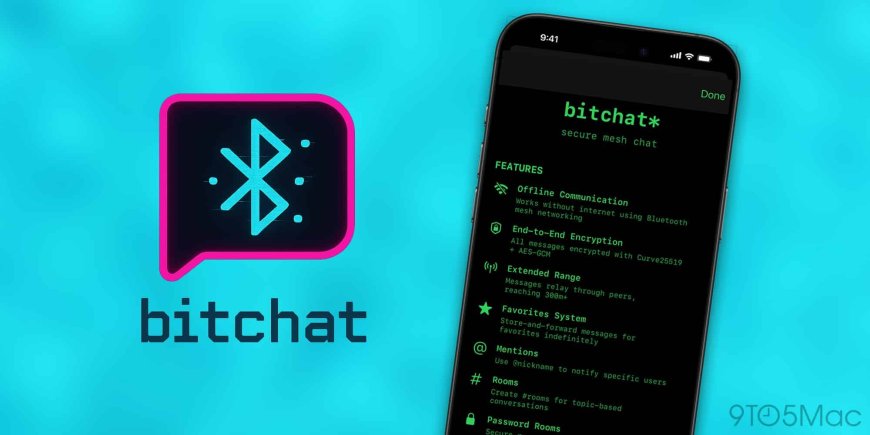
BitChat: Jack Dorsey’s Offline Messaging Experiment That Has Tech Talking
Jack Dorsey does not usually ship quiet projects. But last week, he dropped something unexpected: BitChat, an open-source, decentralized messaging app that works entirely offline.
No internet. No mobile data. No servers.
Just Bluetooth.
It was built fast, released openly, and immediately pulled into the spotlight. Security researchers questioned it. Developers rushed to improve it. Tech communities debated whether it is the future of private communication or just an interesting experiment.
After testing BitChat on both Android and iOS, here is what actually matters.
Why BitChat Is Different From Every Messaging App You Know
Most messaging apps depend on servers, cloud storage, and permanent identities. BitChat throws all of that away.
Instead, it uses Bluetooth Low Energy (BLE) to create a peer-to-peer mesh network. Every phone becomes both a sender and a relay. Messages hop across nearby devices until they reach their destination.
This means:
-
No central infrastructure
-
No accounts
-
No message history stored on servers
It behaves less like WhatsApp and more like a temporary local network that forms on the fly.Think of it as messaging that exists only while devices are nearby.
The Technology Behind BitChat
At its core, BitChat combines three ideas.
Bluetooth Mesh Networking
Messages do not need a direct connection between sender and receiver. They move phone to phone, extending the usable range well beyond normal Bluetooth limits.
Full Decentralization
There is no backend. No company controlling message flow. Everything happens locally.
Encrypted Sessions
BitChat uses the Noise handshake protocol. Encryption keys rotate every 5 to 15 minutes using ephemeral keys. In theory, this makes tracking users and decrypting conversations extremely difficult. The concept is solid. The execution is still evolving.
Security: Promising, but Not Proven
This is where BitChat gets honest. Jack Dorsey openly described the project as a weekend build, developed with help from Goose, an open-source AI assistant created by his company, Block. Shortly after release, security experts flagged architectural issues.
Dorsey responded by adding a warning to the GitHub repository:
-
No external security audit
-
Possible vulnerabilities
-
Not production-ready
That transparency matters. So does the fact that BitChat is fully open source. Developers worldwide are already submitting fixes and improvements. Still, calling BitChat “secure” today would be premature. It is experimental software.
Who Would Actually Use Offline Messaging?
Offline messaging sounds niche until you think about where networks fail.
BitChat could be useful in:
-
Large events with overloaded cell towers
-
Protests or demonstrations
-
Journalistic source protection
-
Corporate meetings requiring temporary private channels
-
Emergency situations where infrastructure is unavailable
These are real problems. Most messaging apps simply cannot function in these environments.
Cross-Platform Reality Check
BitChat supports both Android and iOS, with separate repositories for each.
Testing revealed a clear gap:
-
Android works reliably
-
iOS is unstable and inconsistent
Messages sent from Android reached iOS devices inconsistently, while Android detected iOS messages instantly. The iOS version feels unfinished and is not ready for serious use. This is likely temporary, but it matters right now.
User Experience: Functional, Not Polished
From the outside, BitChat looks like a basic chat app. The interface is minimal and rough around the edges. There is nothing visually impressive here. But that is not where BitChat is trying to win. The real innovation is under the hood: Bluetooth routing, encryption, and key rotation. The UI feels like a placeholder for a bigger idea.
The Bigger Question: Is BitChat a Glimpse of the Future?
BitChat sits at an interesting intersection:
-
Growing concern over surveillance
-
Increasing network shutdowns worldwide
-
Rising interest in decentralization
The idea makes sense. The timing makes sense.
What does not yet make sense is using it for sensitive communication today.
If BitChat:
-
Fixes its iOS issues
-
Passes a proper security audit
-
Improves reliability
It could become a serious tool for specific use cases. If not, it will still remain an important experiment that influenced future designs.
Final Thoughts
BitChat is not ready. But it is not pointless either. It shows what messaging could look like when infrastructure disappears and privacy becomes local again. That alone makes it worth paying attention to. Whether it evolves into a trusted platform or fades into GitHub history will depend on what happens next.