




















How Singapore Became One of the Richest Countries in the World
Discover how Singapore transformed from poverty into one of the world’s richest nations through strong governance, strategic housing, foreign investment, and human capital development.
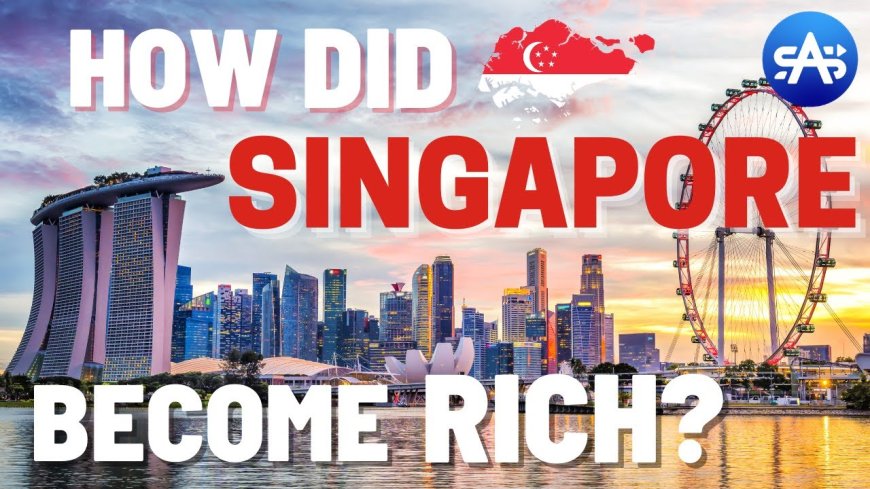
Singapore’s rise from poverty to prosperity is one of the most remarkable economic stories in modern history. Since independence, the country’s GDP per capita has grown more than 125 times, transforming it into a high-income nation within a single generation. Very few countries have achieved such rapid and sustained success.
So how did Singapore do it? The answer lies in a mix of history, strong governance, strategic policy choices, and a long-term focus on people rather than natural resources.
Singapore’s Early History and Economic Starting Point
Singapore began as a trading venture of the British East India Company in the early 18th century. Its value came from geography rather than resources. Located between India, China, and Southeast Asia, the island became an important trading post and, later, a key naval base for the British Empire.
By the late 1800s, Singapore was a Crown Colony with relatively strong infrastructure and stability, which attracted migrants and fueled population growth. However, this early advantage did not translate into broad prosperity.
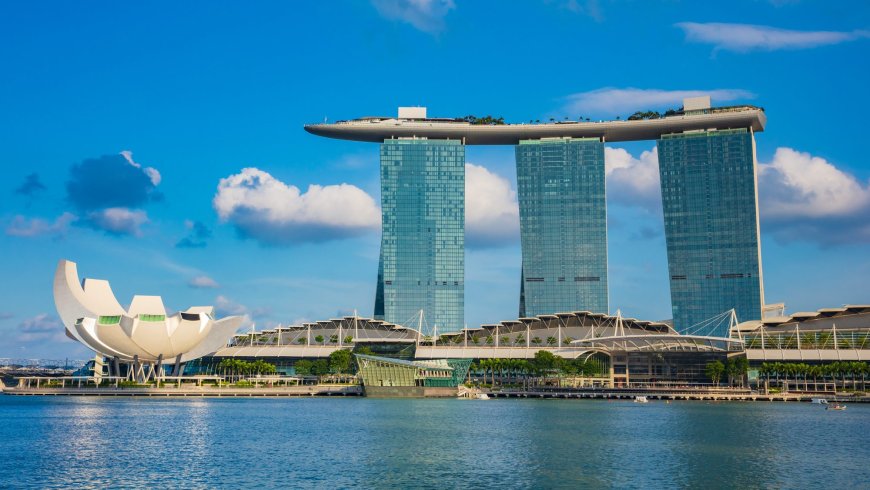
When Singapore became independent in 1965 after separating from Malaysia, the situation was fragile. Unemployment was high, poverty was widespread, and racial, political, and economic tensions threatened stability. Despite being wealthier than some neighbors, living standards for most citizens were low, and the young nation faced an uncertain future.
Leadership and the Foundations of Stability
Singapore’s early survival and eventual success are closely linked to leadership, particularly under Lee Kuan Yew. Trained as a lawyer, he understood the importance of the rule of law, political stability, and predictable institutions.
From the beginning, the government prioritized maintaining strong relationships with international businesses and investors. This focus on legal certainty, order, and long-term planning became a defining feature of Singapore’s development strategy.
Housing as an Economic Strategy
One of Singapore’s most important early policies focused on housing. At independence, much of the population lived in overcrowded slums with poor sanitation and limited access to services.
The government passed the Land Acquisition Act, allowing it to acquire land at low cost. While controversial, the policy was used largely to relocate citizens into planned public housing with proper infrastructure.
Today, around 80 percent of Singapore’s population lives in publicly built housing. Citizens can purchase these homes at subsidized rates, giving them a direct stake in the country’s economic success. Housing policy also includes racial quotas to promote social cohesion in a multicultural society.
Despite this, housing remains expensive, especially in the private market. To reduce the burden, citizens are allowed to use savings from the Central Provident Fund to pay for housing.
Forced Savings and Wealth Creation
The Central Provident Fund (CPF) is a cornerstone of Singapore’s economic model. All working citizens are required to contribute a significant portion of their income, starting at around 20 percent of monthly wages, with additional contributions from employers.
These mandatory savings are held in individual accounts and can be used for retirement, housing, healthcare, and education. The returns are attractive, averaging around five percent, which is high for a government-backed savings scheme.
This system has helped Singapore achieve one of the highest national savings rates in the world, exceeding 53 percent, while also ensuring financial security for citizens.
Why Governance Matters More in Singapore
Good governance is important everywhere, but it is especially critical in Singapore. The country has no meaningful natural resources and a small population compared to other Asian economies.
To compensate, Singapore focused heavily on fighting corruption and making it easy to do business. These efforts paid off. The country consistently ranks near the top globally for ease of doing business, which has been essential in attracting foreign direct investment.
Manufacturing, Wages, and Productivity
Singapore’s economy was built by attracting multinational corporations, initially in low-skilled manufacturing. Over time, the country moved into higher-value sectors such as semiconductors, aerospace, and advanced electronics.
Manufacturing remains the largest sector of the economy, contributing over 20 percent of GDP. Semiconductors are Singapore’s largest export, challenging the assumption that the country relies mainly on finance.
A key institution supporting competitiveness is the National Wages Council, established in 1972. It brings together government, businesses, and trade unions to ensure that wage growth aligns with productivity growth over the long term. This approach has helped Singapore maintain export competitiveness, even as incomes rose.
Foreign Direct Investment as a Growth Engine
Singapore is one of the largest recipients of net foreign direct investment in the world. Despite having a population of under six million, its net FDI inflows exceed those of much larger economies such as India and Japan.
More important than the volume of investment is how Singapore uses it. From the start, the government viewed foreign companies not just as sources of capital, but as partners in skills development.
Technical schools were established, and companies were encouraged to train local workers in areas such as information technology, electronics, and petrochemicals. This strategy allowed Singapore to move from textile exports in the 1970s to high-tech industries by the 1990s.
Education, Human Capital, and Productivity
Education plays a central role in Singapore’s success. The country consistently ranks at the top of international standardized tests and has the world’s highest Human Capital Index at 0.88.
This means a child born in Singapore today is expected to reach 88 percent of their full productivity potential by adulthood, reflecting strong education and healthcare systems.
Strategic Location and Network Effects
Singapore’s location has been turned into a powerful economic advantage. The country acts as a regional hub, providing services to neighboring economies and a gateway for international firms entering Southeast Asia.
The Port of Singapore is the world’s second-largest by volume and the largest for transshipment. Changi Airport plays a similar role in aviation, serving as a major connecting hub for international travel.
These hubs benefit from network effects. As more ships and airlines operate through Singapore, the country can offer higher frequency and better connectivity, reinforcing its hub status. Tourism has also benefited significantly from this infrastructure.
Exports Without Natural Resources
Despite lacking natural resources, Singapore is one of the world’s largest exporters of refined petroleum products. It is the fourth-largest globally, thanks to its advanced oil refining capacity.
This again highlights Singapore’s role as a regional services and processing hub rather than a resource-based economy.
Sovereign Wealth Funds and National Assets
Singapore was an early adopter of sovereign wealth funds, using export earnings and public assets to build long-term financial strength.
The country has two major sovereign wealth funds, Temasek and GIC, both among the largest in the world, with combined assets approaching one trillion dollars.
Temasek evolved from government-owned companies and remains closely involved in national industries. GIC operates more like a global asset manager, focusing on preserving and growing the country’s financial reserves.
Understanding Singapore’s Debt Paradox
Singapore has one of the highest gross debt-to-GDP ratios globally, yet its net debt is effectively zero. This is because the government only borrows for investment, not consumption, and those investments generate returns.
By law, government borrowing must be tied to revenue-generating assets. As a result, Singapore maintains a AAA credit rating and is effectively a creditor nation.
Economic Challenges Singapore Faces Today
Despite its success, Singapore faces real challenges. Income inequality remains relatively high, with a Gini coefficient of around 0.45, though this drops below 0.4 after taxes and transfers.
Affordability is another major issue. Singapore is the most expensive place in the world to own a car, a deliberate policy to encourage public transport use. Housing, especially in the private sector, is also among the most expensive globally.
Political criticism has focused on restrictions on press freedom, with Singapore ranking low on global press freedom indices. Supporters argue these trade-offs have contributed to stability, while critics see them as authoritarian tendencies.
Productivity growth has also slowed in recent years, with concerns that profits and returns on assets are declining in several key sectors.
Finally, Singapore’s very low birth rate poses long-term demographic challenges, increasing reliance on migrant workers to sustain economic growth.
The Core Lesson of Singapore’s Success
Singapore’s transformation was not accidental. It was driven by consistent, long-term governance focused on housing, savings, education, openness to trade, and disciplined investment.
While Singapore’s city-state size made some policies easier to implement, its experience shows how effective institutions and human capital investment can compensate for a lack of natural resources.
The question that remains is whether this model can be replicated at a larger scale, or whether Singapore’s success is unique to its circumstances.