


















Why Greenland Has Become a Global Flashpoint
Why is Greenland suddenly at the center of global politics? This article explains Trump’s interest, Arctic security risks, and what it means for Greenlanders.
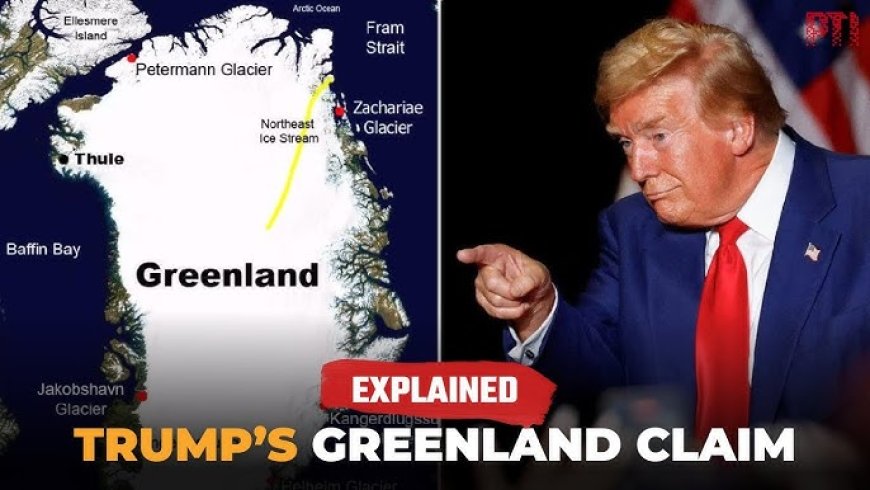
Greenland rarely features in global headlines. A vast Arctic island with just about 57,000 people, scattered along an unforgiving coastline, it has long sat quietly between great powers. That calm has now been broken.
When Donald Trump openly suggested that the United States might take control of Greenland, even refusing to rule out military force, it sent shockwaves through Europe and raised uncomfortable questions for Greenlanders themselves. What once seemed unthinkable is now part of an open geopolitical debate.
At the heart of the issue is security, but beneath that lie history, resources, climate change, and the unresolved question of who ultimately decides Greenland’s future.
Greenland’s Strategic Location and Why It Matters
Geography is destiny in international politics, and Greenland’s geography is exceptional. The island sits between North America, Europe, and Russia, directly along the shortest route between the European part of Russia and the United States. In military terms, Greenland is often described as a giant aircraft carrier anchored in the Arctic.
This is why the United States built Pituffik Space Base, formerly Thule Air Base, on Greenland’s northwest coast during the Cold War. Its purpose was clear: early detection of Soviet missile launches and a forward defense line thousands of miles north of the US mainland. Today, it remains the northernmost American military base in the world.
While Denmark technically controls Greenland, it is American military power that underwrites the island’s security. Danish patrols still cross the icy interior on dog sleds, and a handful of naval vessels monitor the coast, but no one doubts that the US base is the real deterrent.
Trump’s Argument: Security and Great Power Rivalry
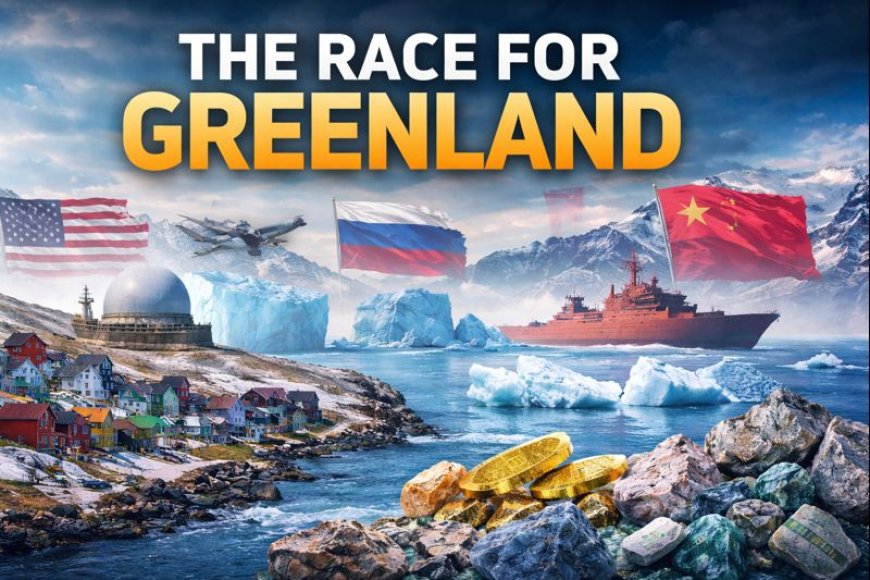
Donald Trump’s interest in Greenland goes far beyond existing military cooperation. He argues that the United States must control the island outright to counter growing Russian and Chinese activity in the Arctic.
From his perspective, Greenland is not just strategically important, it is vulnerable. Increased Russian naval movement, Chinese research vessels, and broader Arctic cooperation between Moscow and Beijing are seen as direct threats to US interests.
European leaders were stunned by Trump’s language. Denmark, a NATO ally, suddenly found itself being treated less like a partner and more like an obstacle. Danish officials have since faced pressure to expand surveillance across Greenland, particularly in the strategically vital GIUK Gap, the naval corridor between Greenland, Iceland, and the UK that NATO uses to monitor Russian submarines.
Denmark has responded by investing in drones and new naval assets, but even Danish defense experts admit the challenge is overwhelming. Greenland is half the size of Europe. Full surveillance is simply impossible.
How Greenland Became Danish Territory
Greenland’s political status is the product of centuries of history rather than geography.
Inuit communities lived on the island for thousands of years before Denmark began colonizing Greenland in 1721. Over time, Danish rule imposed Christianity, language, and social systems that deeply disrupted Inuit culture and family structures. The trauma of that period still shapes Greenlandic society.
During World War Two, when Nazi Germany occupied Denmark, the United States moved in to protect Greenland from German forces. With Danish approval, American troops built airfields and bases across the island. More than ten thousand US aircraft passed through Greenland on their way to Europe.
After the war, the United States even offered to buy Greenland from Denmark for one hundred million dollars in gold. Denmark refused, but both countries joined NATO soon after. A 1951 defense treaty formalized US military presence on the island, and it remains in force today.
Resources Beneath the Ice
Security is only part of the story.
Greenland holds one of the world’s most promising collections of untapped mineral resources. Rare earth elements, critical for modern electronics and green technologies, are scattered across its coastline, alongside precious metals and industrial minerals.
Yet the reality is more complicated than the maps suggest. Only two active mines operate in Greenland today, employing roughly one hundred people. Exploration is costly, infrastructure is limited, and environmental concerns are serious. In 2021, Greenland halted exploration at a major rare earth site due to the presence of radioactive uranium near populated areas.
There are no roads connecting Greenland’s settlements. Fjords, glaciers, and mountains dominate the terrain. Mining here is expensive and risky.
Still, climate change is altering the equation. As Arctic ice retreats, access to interior resources becomes easier, and that has caught the attention of governments and corporations alike.
The Arctic Shipping Future
Melting ice is also reshaping global trade routes.
New Arctic shipping passages, including the Northwest Passage, the Northern Sea Route, and the Transpolar Sea Route, could dramatically shorten travel between Asia and Europe. These routes bypass chokepoints like the Suez Canal and could redefine global logistics.
For now, Arctic navigation remains limited and dependent on costly icebreakers. But long term, the potential is enormous, and Greenland sits at the center of that future.
Greenland’s Economy and Dependence on Denmark
Despite its strategic value, Greenland’s economy is fragile.
Fishing remains its main industry, but it cannot sustain the island alone. Each year, Denmark provides roughly 500 million euros in financial support, covering about half of Greenland’s public budget. Without it, many communities would face severe economic hardship.
For Denmark, the relationship is not purely altruistic. Greenland gives Copenhagen outsized influence in global politics. It allows Denmark to sit at the table with major powers like the US, Russia, and China, punching well above its demographic weight.
Independence and Greenlandic Identity
Most Greenlanders do not see Denmark as their long-term future.
The island is now a semiautonomous territory with its own parliament and government. It controls domestic affairs, while Denmark retains responsibility for foreign policy and defense. Crucially, Greenland has the legal right to declare independence through a referendum.
Polls suggest a majority support independence in principle. Many Greenlanders see it as a matter of identity and dignity. They are not Danish. They are Greenlandic.
However, independence requires economic stability, and that remains the biggest obstacle. This is why Greenland actively seeks international partners. It maintains representative offices in Europe, North America, and China, and has signed cooperation agreements with both the US and the EU on mineral exploration.
A Test for the Global Order
Trump’s interest in Greenland is not just about one island. It reflects a broader shift toward great power competition and spheres of influence. For European allies, the idea that the US might pressure a NATO partner into territorial concessions is deeply unsettling. Some analysts compare the rhetoric to tactics used by Russia in Ukraine or China toward Taiwan.
Denmark has responded by widening the issue beyond a bilateral dispute, seeking solidarity from other European states. The outcome will be closely watched worldwide.
At the center of it all is a simple but profound question. In a world increasingly shaped by powerful states and strategic ambition, will Greenlanders be allowed to decide their own future, or will their island become another bargaining chip in global politics?