










The Origin of Earth and the Beginning of Life
Life on Earth began long before plants, animals, or even oceans existed. About 4.5 billion years ago, Earth formed as a massive ball of molten rock, constantly struck by meteorites and debris from space. Many of these rocks contained water trapped inside them.

Life on Earth began long before plants, animals, or even oceans existed. About 4.5 billion years ago, Earth formed as a massive ball of molten rock, constantly struck by meteorites and debris from space. Many of these rocks contained water trapped inside them. As the planet cooled, this water escaped as steam, condensed in the atmosphere, and fell as rain over thousands of years. The rain filled the surface of the Earth, forming oceans. Deep within these oceans, hydrothermal vents released heat and chemicals that created conditions suitable for complex chemical reactions, which eventually led to the origin of life.
Biology as Chemistry in Action
Biology is the scientific study of life, but at its foundation, it is chemistry operating in an organized and controlled manner. All living organisms are composed of molecules that interact in specific ways to sustain life. Living things are able to obtain and use energy, grow and develop, reproduce, respond to their environment, and maintain internal balance. These features clearly separate living organisms from non-living objects such as rocks, which lack these capabilities.
Essential Biological Molecules of Life
Living organisms rely on several key biological molecules to function properly. Carbohydrates provide immediate energy, while lipids store energy for long-term use and form essential structures such as cell membranes. Proteins are responsible for building tissues, transporting substances, and regulating chemical reactions. Nucleic acids store genetic information and guide the production of proteins. For these chemical processes to occur efficiently, cells use enzymes, which are proteins that speed up specific reactions necessary for life.
Cell Types and Organization of Life
All living things are made up of cells, which are the smallest units capable of carrying out life processes. Cells are divided into two main types: prokaryotic and eukaryotic. Prokaryotic cells, including bacteria and archaea, lack a nucleus and membrane-bound organelles, with their DNA freely floating inside the cell. Eukaryotic cells contain a nucleus and specialized organelles that perform specific functions. This cellular complexity allows eukaryotes to form multicellular organisms such as plants, animals, fungi, and protists.
Homeostasis and Internal Balance in Cells
For survival, organisms must maintain stable internal conditions, a process known as homeostasis. In humans, this includes sweating when hot and shivering when cold. At the cellular level, homeostasis involves regulating temperature, pH, and chemical concentrations. Enzymes only function within specific conditions, and extreme changes can cause them to lose their shape and stop working. Cells actively regulate their internal environment to ensure proper functioning.
Structure and Function of the Cell Membrane
The cell membrane plays a crucial role in maintaining homeostasis. It is composed of a phospholipid bilayer that selectively controls the movement of substances in and out of the cell. Small molecules such as oxygen and water can pass through easily, while larger or charged particles require protein channels. This selective permeability allows the cell to regulate its internal environment effectively.
Diffusion, Osmosis, and Active Transport
Substances naturally move from areas of high concentration to low concentration through diffusion. Water moves across membranes by osmosis, which explains why drinking saltwater is harmful, as it draws water out of cells and causes dehydration. Sometimes, cells must move substances against the concentration gradient. This process requires energy and is known as active transport.
ATP and Cellular Respiration
Energy for active processes within the cell is supplied by adenosine triphosphate, or ATP. ATP stores energy in chemical bonds that release energy when broken. Cells produce ATP mainly through cellular respiration, which occurs in the mitochondria. During this process, glucose reacts with oxygen to produce ATP, carbon dioxide, and water. Humans obtain glucose from food, while plants produce it through photosynthesis.
Photosynthesis and Energy Production in Plants
Photosynthesis is the process by which plants make their own food using sunlight. This process occurs in chloroplasts that contain chlorophyll, a pigment that absorbs light energy. Chlorophyll absorbs red and blue light and reflects green light, giving plants their green color. The absorbed energy is used to convert carbon dioxide and water into glucose, with oxygen released as a by-product.
Structure of DNA and Genetic Information
DNA is the molecule responsible for storing genetic information. It consists of two strands arranged in a double helix and is made of repeating units called nucleotides. Each nucleotide contains a sugar, a phosphate group, and a nitrogenous base. The four bases in DNA pair specifically, allowing DNA to store information in the sequence of these bases.
Genes and Protein Synthesis
A gene is a segment of DNA that contains instructions for making a protein. Proteins determine many traits and perform essential functions in the body. Because DNA remains in the nucleus, its instructions are copied into messenger RNA during transcription. The mRNA then travels to ribosomes, where translation occurs and amino acids are assembled into proteins.
Chromosomes, Alleles, and Inheritance
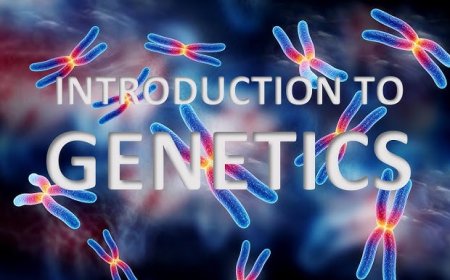
DNA is tightly packed into chromosomes to fit inside the nucleus. Humans have 23 pairs of chromosomes, with one set inherited from each parent. Different versions of the same gene are known as alleles. Some alleles are dominant while others are recessive, which explains patterns of inheritance and variation in traits among individuals.
Mitosis and Meiosis in Cell Division
Cells divide through two main processes: mitosis and meiosis. Mitosis produces identical cells used for growth and repair. Meiosis produces gametes and introduces genetic variation through processes such as crossing over. Meiosis ensures that offspring receive the correct number of chromosomes after fertilization.
Mutations, Natural Selection, and Evolution
Mutations are changes in the DNA sequence that can occur during replication or due to environmental factors. While some mutations are harmful, others have no effect or may be beneficial. Beneficial mutations can increase an organism’s ability to survive and reproduce. Over time, natural selection favors these traits, leading to evolution. However, some mutations disrupt cell cycle control and result in uncontrolled cell division, known as cancer.
Bacteria, Viruses, and Human Health
Bacteria are living, single-celled organisms that can reproduce independently. Many bacteria are beneficial and play important roles in digestion and immunity. Viruses are not made of cells and can only reproduce inside host organisms. Because of this difference, bacterial infections can be treated with antibiotics, while viral infections cannot.
The Nervous System and Electrical Signaling
The nervous system allows the body to communicate through electrical signals. Neurons transmit signals called action potentials along their axons. When a stimulus reaches a certain threshold, ions move across the neuron’s membrane, creating a rapid electrical signal. Some neurons are insulated with myelin, which increases the speed of signal transmission. Signals are passed between neurons using neurotransmitters across small gaps called synapses.
Conclusion: Understanding Life through Biology
Biology explains how life began, how it functions, and how it changes over time. From the formation of Earth to the complex systems operating within the human body, biology reveals that life is highly organized and interconnected. Studying biology helps us understand our environment, our health, and our place in the natural world.