


















Why Taiwan Sits at the Center of the US–China Power Struggle
Why Taiwan sits at the center of rising US–China tensions. Explore the island’s strategic location, military importance, semiconductor dominance, and why neither Beijing nor Washington can afford to back down.
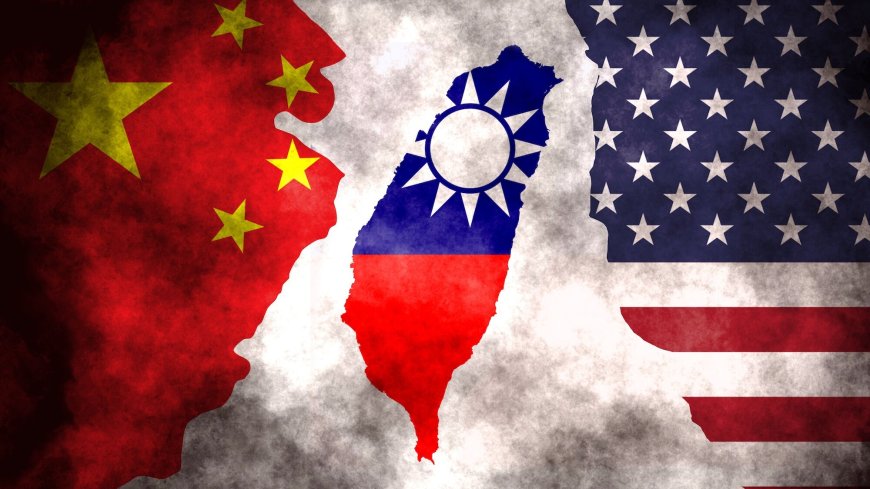
Chinese military drills around Taiwan are no longer rare events. They are larger, louder, and more frequent, designed to send a clear signal. Beijing wants the world to understand that Taiwan is not a distant issue or a frozen conflict. For China, it is unfinished business.
Across the Pacific, the United States is responding in kind. War games, naval exercises, and expanded military cooperation with allies all point to the same reality: Taiwan has become one of the most dangerous flashpoints in global politics. At stake is far more than one island.
Taiwan’s Geography Makes It Impossible to Ignore
Taiwan’s strategic importance begins with its location. Home to about 23 million people, the island sits just 130 kilometers off China’s coast. Several smaller islands under Taiwanese control lie even closer to the mainland.
More importantly, Taiwan is surrounded by critical maritime chokepoints. To the west is the Taiwan Strait, one of the busiest shipping lanes on Earth. To the north lies the Miyako Strait between Taiwan and Japan. To the south is the Bashi Strait, linking the South China Sea to the Pacific via the Philippines.
Together, these waterways form gateways to the Pacific Ocean. For China, access to them is essential. For the United States and its allies, control over them limits China’s ability to project military power beyond its shores.
This is why Taiwan is often described as the key link in the “first island chain,” a line of US-aligned territories stretching from Japan through Taiwan and down to the Philippines. As long as this chain holds, Washington can operate close to China’s coastline while constraining Beijing’s naval ambitions.
China’s Perspective: Sovereignty and Strategic Access
From Beijing’s point of view, Taiwan is both a strategic obstacle and a historical wound.
Chinese leaders argue that Taiwan blocks China’s direct access to the Pacific and disrupts the continuity of its coastline. In any future conflict, Taiwan could serve as a forward base for foreign militaries. That is a scenario China considers unacceptable.
But the issue goes deeper than military geography. Taiwan is central to China’s national narrative. The Chinese Communist Party views the loss of Taiwan as part of the so-called “Century of Humiliation,” a period when foreign powers carved up Chinese territory and undermined its sovereignty.
Although the People’s Republic of China has never governed Taiwan, it claims the island as a breakaway province. Reunification, whether peaceful or forced, is framed as a necessary step in restoring China’s status as a great power.
Under President Xi Jinping, this goal has taken on new urgency. Reclaiming Taiwan is closely tied to his vision of national rejuvenation and personal legacy.
The US Role: Strategic Ambiguity and Regional Power
The United States occupies an awkward position. Since the late 1970s, it has recognized Beijing as the sole legal government of China. At the same time, it maintains close informal ties with Taiwan and supplies the island with defensive weapons.
This deliberate ambiguity is meant to deter both sides. It discourages China from invading Taiwan while also discouraging Taiwan from formally declaring independence. Yet ambiguity does not mean indifference.
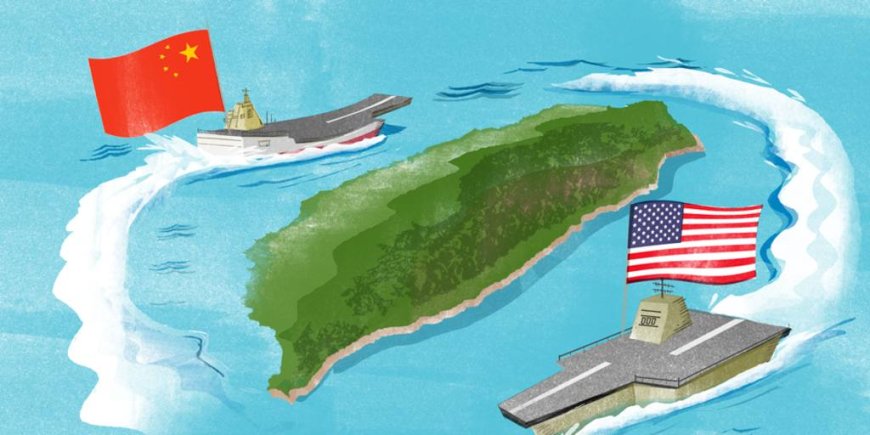
Taiwan plays a critical role in US military planning. American bases in Japan, South Korea, and the Philippines form a defensive arc around China. Taiwan sits at the center of that arc. Losing it would significantly weaken US influence in the Indo-Pacific and raise doubts among allies about Washington’s security commitments.
That concern explains why the US has expanded military cooperation with Japan and the Philippines, including gaining access to bases near the Bashi Strait. Joint exercises, including drills that simulate sinking enemy ships, are meant to signal resolve to Beijing.
A Naval Arms Race in the Pacific
China is not standing still. It is rapidly modernizing its navy, investing heavily in submarines, missiles, and aircraft carriers. The launch of the Fujian, China’s largest and most advanced aircraft carrier, is part of a broader effort to challenge US dominance at sea.
Chinese military strategy focuses on what analysts call “anti-access and area denial.” The goal is to make it too dangerous for US forces to operate near China during a conflict, especially around Taiwan.
In practical terms, that means pushing the US navy farther from China’s coast and weakening the protective shield around Taiwan.
Taiwan’s Economic Weight Far Exceeds Its Size
Beyond military strategy, Taiwan matters because of money. A lot of it. The island is home to Taiwan Semiconductor Manufacturing Company, better known as TSMC. It produces around 90 percent of the world’s most advanced semiconductors. These chips power smartphones, cars, medical devices, military systems, and artificial intelligence.
Both China and the United States depend on them. So does almost every modern economy. US officials worry that if China were to take control of Taiwan, it could dominate global technology supply chains and reshape the international economic order. From Washington’s perspective, this is not just about trade but about long-term industrial power.
China, however, insists that its interest in Taiwan is not economic. For Beijing, Taiwan is primarily a question of sovereignty and national unity.
Taiwan’s Own Story: Democracy Under Pressure
Lost in the rivalry between superpowers is the voice of Taiwan itself. Taiwan has transformed dramatically over the past few decades. Once ruled by an authoritarian regime, it is now a vibrant democracy with competitive elections, a free press, and strong civil liberties. It was the first place in Asia to legalize same-sex marriage.
Most Taiwanese prefer to maintain the current status quo. They do not want unification with China, but many are cautious about formal independence, fearing it could trigger war.
Daily life on the island continues, even as military drills dominate headlines. The threat from Beijing has become a background reality, something people live with rather than constantly react to.
At the same time, many Taiwanese worry that their fate is being decided elsewhere. In the contest between China and the United States, Taiwan often feels less like an actor and more like a bargaining chip.
A Conflict Neither Side Can Walk Away From
For China, Taiwan represents historical justice and strategic security. For the United States, it represents regional stability, alliance credibility, and the defense of democratic values.
Neither side sees backing down as an option. If China were to seize Taiwan, it would send shockwaves through Asia. US allies would question whether Washington could still be trusted. Democracies across the region would feel exposed.
Yet any military conflict over Taiwan would be devastating, not just for the island but for the global economy. As China tightens its military pressure and the United States strengthens its alliances, the space for compromise continues to shrink. And as the world watches two superpowers circle each other, one uncomfortable truth remains.
Taiwan’s future may shape the global order, but whether Taiwan’s people get to decide that future is still an open question.