


















South America vs. Latin America: Key Differences Explained.
When discussing the Western Hemisphere, the terms South America and Latin America often surface. While some people use these terms interchangeably, they represent distinct concepts with unique geographical, cultural, and historical connotations. Understanding these differences not only enriches our appreciation of these regions but also clarifies their global significance.
Introduction to South America and Latin America
Definition of South America
South America is a vast continent located entirely in the Southern Hemisphere, stretching from the Caribbean Sea to the Southern Ocean. It is bordered by the Pacific Ocean to the west and the Atlantic Ocean to the east. South America comprises 12 sovereign nations and 3 dependent territories, including well-known countries like Brazil, Argentina, and Chile. The continent is home to some of the world’s most famous natural landmarks, including the Andes Mountains, the Amazon Rainforest, and the Galápagos Islands, making it a hub of biodiversity.
Definition of Latin America
Latin America, on the other hand, is not strictly defined by geography but by cultural and linguistic factors. It refers to the region of the Americas where Romance languages—those derived from Latin, such as Spanish, Portuguese, and French—are predominantly spoken. Latin America encompasses much more than just South America; it also includes Mexico, the countries of Central America, and several islands in the Caribbean like Cuba and the Dominican Republic. This linguistic and cultural unity plays a significant role in shaping the region’s identity, even as geographical distinctions persist.
Geographical Boundaries
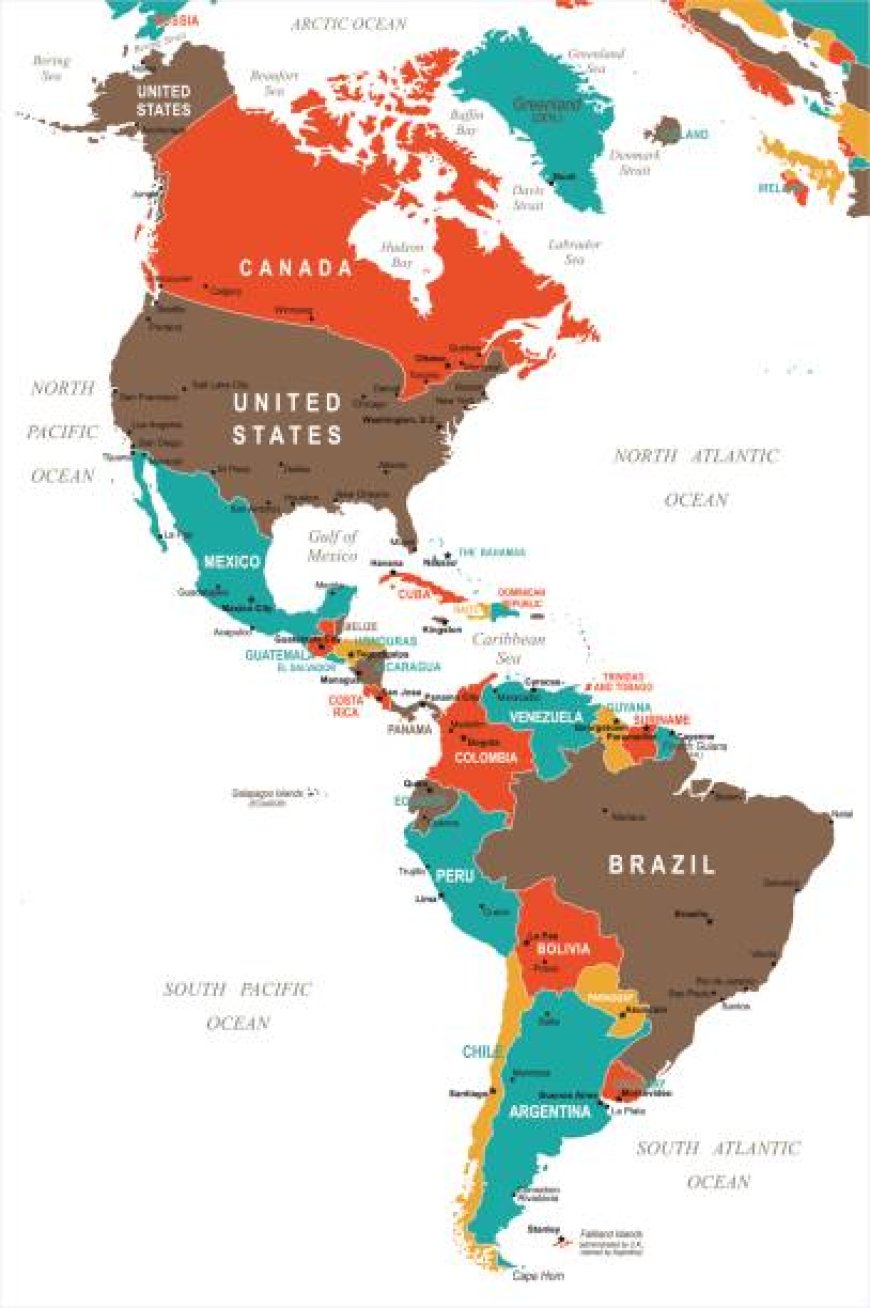
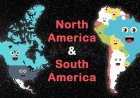
Map of North and South America
Countries in South America
South America is a continent of diverse physical features. It includes countries like Brazil, Argentina, Colombia, and Chile, all of which boast unique landscapes. From the vast plains of Argentina's Pampas to the Amazon Basin’s unparalleled ecological richness, South America is a continent of extremes, both in terms of geography and climate. The Andes mountain range runs along the western edge, and Brazil’s vast rainforests contribute significantly to the global climate.
Countries in Latin America
While South America is part of Latin America, the latter's scope is much broader. Latin America stretches from Mexico in the north down to the southernmost parts of Chile and Argentina, encompassing all the nations where Romance languages are spoken. This includes countries in Central America such as Guatemala and Panama, as well as island nations in the Caribbean, including Puerto Rico and Cuba. The boundaries of Latin America are not only geographical but also cultural, shaped by shared colonial histories.
Overlapping Regions
One of the most important distinctions is that while South America is entirely within the realm of Latin America, Latin America itself extends beyond South America’s boundaries. For example, Mexico, though geographically part of North America, is included in Latin America due to its linguistic and cultural ties to the rest of the region, especially its Spanish colonial past.
Cultural Differences
Language Variations
Language is one of the most defining features of Latin America. While Spanish dominates the majority of the region, Brazil stands out as the largest Portuguese-speaking country. The cultural influence of French-speaking nations like Haiti and French Guiana also adds to Latin America’s linguistic diversity. The diversity in languages is mirrored in local dialects, expressions, and regional variations in culture and customs, making language an essential aspect of regional identity.
Indigenous Influences
Both South America and Latin America are home to rich indigenous cultures, but the influence of indigenous peoples varies significantly across the regions. In South America, cultures like the Quechua and Aymara in the Andes and the Guarani in Brazil have profoundly shaped local traditions, festivals, and cuisines. In contrast, Latin America, including Central America and Mexico, has been deeply influenced by ancient civilizations like the Aztecs and Mayans, whose legacies are preserved in cultural practices, languages, and archaeology. These indigenous roots are reflected in modern cultural expressions and festivals such as the Day of the Dead in Mexico and Inti Raymi in Peru.
Colonial Legacies
South America was primarily colonized by Spain and Portugal, with the Treaty of Tordesillas dividing the continent between the two colonial powers. The result is a continent that is mostly Spanish-speaking, except for Brazil, where Portuguese is the official language. Latin America, however, includes countries like Haiti and French Guiana, which were colonized by France, leading to French as an official language in those regions. The legacies of colonial rule are visible in the region’s architecture, governance systems, and religions, with Catholicism being a dominant force across both South America and Latin America.
Economic Comparisons
Economic Powerhouses in South America
South America’s economy is largely based on natural resources, agriculture, and increasingly on technology and services. Brazil is the region's largest economy, known for its vast natural resources such as iron ore, oil, and agricultural products like soybeans and coffee. Argentina, another economic powerhouse, is known for its agricultural exports, including beef, grains, and wine. Chile is a global leader in copper mining, and Peru has become a significant player in the mining and agricultural sectors as well.
Economic Powerhouses in Latin America
Mexico is the dominant economic force in Latin America, largely due to its proximity to the United States and its booming manufacturing sector. The North American Free Trade Agreement (NAFTA), now replaced by the United States-Mexico-Canada Agreement (USMCA), has integrated Mexico into global supply chains, making it a manufacturing hub. Countries like Chile, Peru, and Colombia also play critical roles in Latin America’s economy, particularly in mining and natural resource exports.
Historical Background
Colonization of South America
The colonial history of South America is marked by the Spanish and Portuguese conquests in the 16th century, which divided the continent into Spanish-speaking colonies and Portuguese-speaking Brazil. The influence of Spain and Portugal is still seen in the region’s cultural, political, and religious structures. The discovery of gold and silver was a driving force behind the early colonization of the continent, leading to massive wealth extraction and the exploitation of indigenous peoples.
Colonization of Latin America
Latin America's colonial history is even more diverse. While Spain and Portugal dominated the majority of the region, French colonization in Haiti, the Caribbean, and parts of French Guiana added another layer of complexity. The enduring impact of these colonial powers is visible in the region's languages, legal systems, and social hierarchies. Furthermore, the varied independence movements across Latin America created different political landscapes post-colonialism, with countries like Mexico and Brazil experiencing different struggles and outcomes.
Modern-Day Distinctions
Demographic Variances
South America’s demographic makeup is predominantly urban, with large metropolitan areas like São Paulo, Buenos Aires, and Rio de Janeiro dominating the landscape. These urban centers are hubs of culture, commerce, and technology. In contrast, Latin America as a whole exhibits a more diverse demographic distribution. While countries like Brazil and Mexico have large urban populations, countries in Central America such as Honduras and Guatemala still have a more rural population.
Political Alliances
South America has its own set of political alliances, such as the Union of South American Nations (UNASUR), which promotes economic and political integration among South American countries. Latin America, being broader, participates in regional organizations like the Community of Latin American and Caribbean States (CELAC) and the Organization of American States (OAS), reflecting its broader scope and political complexity.
Travel and Tourism
Popular Destinations in South America
South America is renowned for its natural beauty and historical landmarks. Iconic destinations like Machu Picchu in Peru, the Amazon Rainforest, Iguazu Falls, and the Galápagos Islands attract millions of tourists each year. Adventure tourism, including trekking in the Andes and exploring the wetlands of the Pantanal, are also major draws for travelers seeking unique experiences.
Popular Destinations in Latin America
Latin America offers an even wider range of travel opportunities, from the ancient Mayan ruins of Mexico to the tropical beaches of the Caribbean. Cuba, with its rich cultural heritage, is a popular destination for travelers seeking a mix of history, music, and vibrant street life. The city of Mexico City offers both modern urban experiences and historic sites, making it one of the region’s most dynamic destinations.
Global Perspectives
Representation in International Organizations
South American countries play an active role in organizations like MERCOSUR, which promotes regional trade and economic cooperation among South American nations. Latin America’s broader representation includes participation in global organizations such as the United Nations, where Mexico and Brazil are active members, as well as regional agreements like NAFTA and CARICOM, which include countries outside South America.
Media Perceptions and Stereotypes
While South America is often portrayed in the media as a land of exotic landscapes and natural wonders, Latin America is frequently characterized by its vibrant culture, music, and complex social and economic challenges. These portrayals can oversimplify the realities of life in these regions, which are marked by both remarkable resilience and ongoing struggles.
FAQs
Why is Mexico not part of South America?
Mexico is geographically part of North America, but culturally and linguistically, it shares more in common with Latin America, which includes regions where Romance languages are spoken.
Do Latin American countries share the same culture?
No, Latin America is incredibly diverse, with each country offering a unique blend of traditions, languages, and cultural influences shaped by indigenous, colonial, and modern forces.
Is Brazil part of Latin America?
Yes, Brazil is part of Latin America due to its Portuguese colonial heritage, despite its unique linguistic and cultural characteristics.
How do South America and Latin America differ in cuisine?
South American cuisine includes dishes like ceviche, empanadas, and churrasco, while Latin American cuisine includes foods like tacos, tamales, and Caribbean specialties like jerk chicken.
What role does language play in defining these regions?
Language is a defining factor for Latin America, encompassing regions where Romance languages dominate, while South America is a geographical term.
Are the terms interchangeable?
No, the terms are not interchangeable. South America refers to a specific continent, while Latin America refers to a cultural and linguistic region with diverse geographical boundaries.